
Knock knock
When political canvassing changes minds — or doesn't

A mainstay of political campaigns is door-to-door canvassing. When an election comes up, it is not unusual to get a knock on your door from volunteers — or even your local candidate — reminding you to get out and vote. I have probably knocked on over a thousand doors in the last decade. It is one of the most intimidating and effective ways to engage voters.
The first time I went out and knocked on doors was in 2017, when I was sent to Surrey to help local candidates collect nomination signatures. In order to run in an election in British Columbia, a potential candidate needs to collect the signatures and addresses of at least 75 people who live in the riding they intend to run in.
Over four days I went from having never knocked on a door before to knocking on hundreds. Nomination signatures is not the most challenging thing to ask people for — they do not need to support or vote for the candidate, it simply gives them the choice to vote for that candidate by getting them on the ballot. For many folks, they were willing to sign it to support the democratic process.
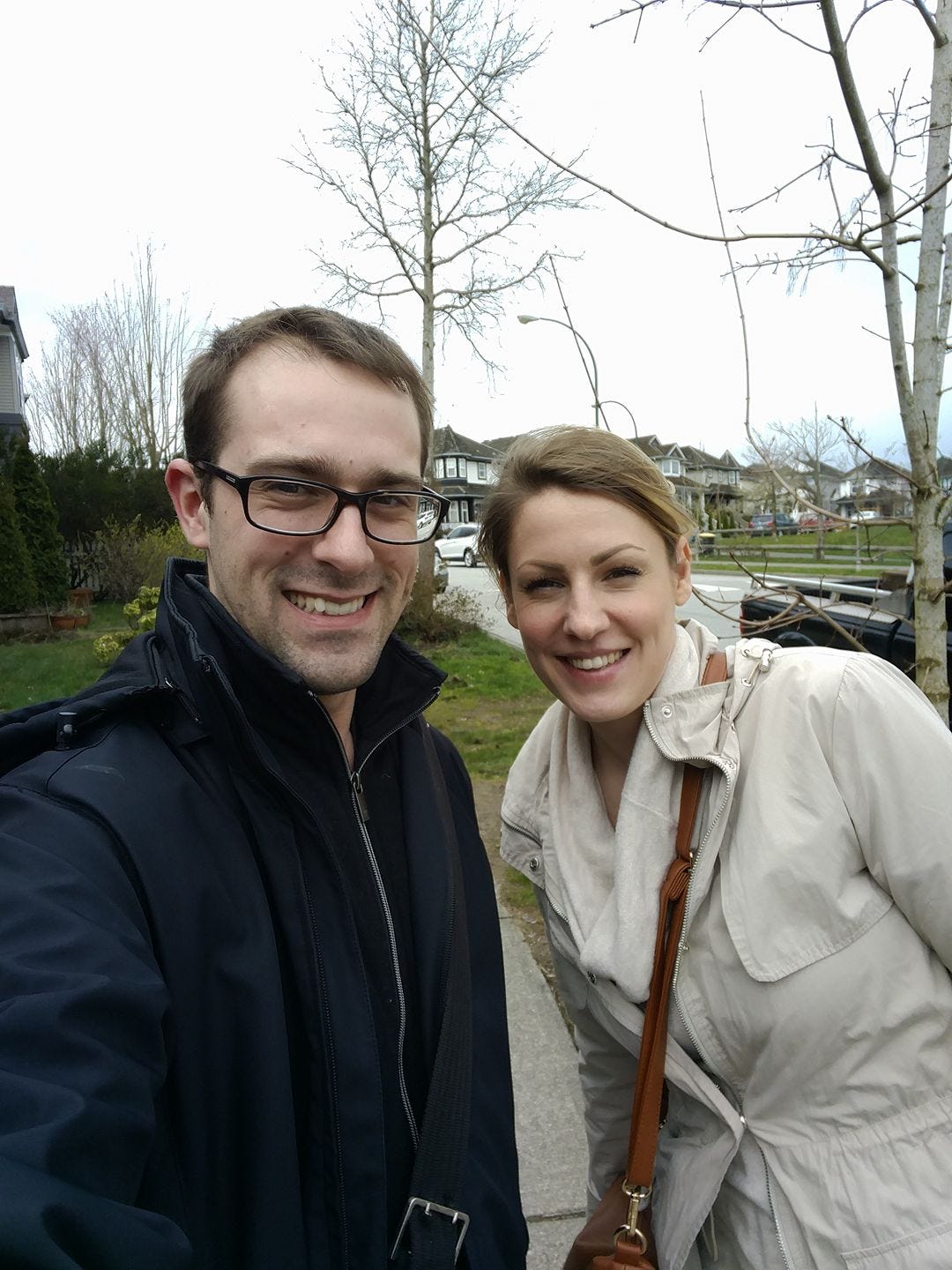
We succeeded in our goal — the four candidates I was supporting all received enough signatures and appeared on the ballot on election day. In all those hundreds of doors, only one was truly negative — an NDP supporter who screamed and swore at us for “stealing” their votes and slammed the door. Even though it was frustrating, it accounted for only ~0.002% of the doors we knocked on. The rest were lovely folks, or at least polite. Generally if people did not want to talk to us, they just did not answer.
However, canvassing folks with the hopes of changing their minds and swinging a vote your way is a far more complicated task. While there is plenty of research on the effectiveness of door-to-door canvassing, there are conflicting results depending on the methodology of the study.
“Do political campaigns have important effects on voter behavior? Debate over this question has raged for several decades, generating a large literature with mixed results. Scholars remain divided on key issues. Some maintain that campaigns have only minor effects on political behavior, whereas others argue that waging a significant campaign increases the chances of election success. Still others claim that the level of campaign activity matters but only for some candidates (e.g., for challengers but not incumbent politicians).”
Gerber, A. S., & Green, D. P. (1999). Does canvassing increase voter turnout? A field experiment. Proceedings of the National Academy of Sciences of the United States of America, 96(19), 10939–10942.
When contact changes minds?
A few years before I would start hitting the doorsteps, an incredible study made international headlines. When Contact Changes Minds: An Experiment on Transmission of Support for Gay Equality was published in the academic journal Science in December 2014. It supported two conclusions: first, that people's minds on the issue of gay marriage could be changed by personal, doorstep conversations — but that their minds would only remain changed if the canvasser was themselves gay. The hypothesis was that this proved the potential of intergroup contact — if you make a positive personal connection with a gay man, you then think, “now all gay people are great!”
The potential was so strong, the researcher repeated the experiment with abortion — canvassers who had an abortion previously shared their story on the doorsteps, and again found people were persuaded to change their mind.
“LaCour and Green (2014, Science) report a remarkable result: a ~20-minute conversation with a gay canvasser produces large positive shifts in feelings towards gay people that persist for over a year. The study’s design is also notable: over 12% of voters invited to participate in the ostensibly unrelated survey that formed the study’s measurement apparatus agreed to be surveyed; nearly 90% were successfully reinterviewed; and each voter referred an average of 1.33 other voters to be part of the study who lived in the study area.”
Broockman, David & Kalla, Joshua & Aronow, Peter. (2020). Irregularities in LaCour (2014).
Suddenly everyone was shifting their campaign plans towards “deep canvassing” — the method described in the paper. Entire strategies were formed around LaCour’s research.
There was one problem with the study.

The data was falsified. The survey company listed in the study denied any involvement. The funding didn’t actually exist. The co-author admitted to having never seen the raw data. It was a massive scandal.
Ironically, the researchers who exposed the fraud did not set out to critique the paper. They were inspired by it, and wanted to expand on the research. When they encountered difficulties replicating the methodology, they reached out to the company that had supposedly conducted the surveys — and discovered they had done no such work. They continued to dig and finally brought their evidence to the co-author, respected political scientist Donald Green, who retracted the paper.
The traditional method
Most of the canvassing I have done — notwithstanding the signature collecting mentioned above — has been the traditional kind: voter identification. The goal of voter identification is to find the people who are already thinking of voting for you, get some way of following up with them, and remind them to vote when the polls open. It’s a strategy that prioritizes efficiency. You only have a limited time in a campaign period, so if you can find your voters and make sure they turn up, you have a better chance of winning.
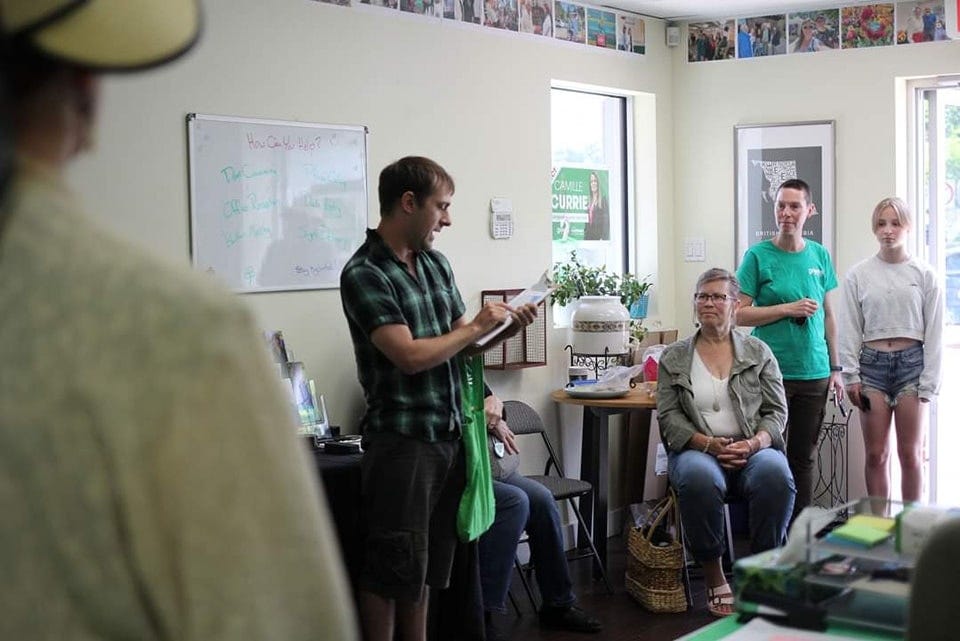
This is also much easier to train a rookie canvasser to do. Having long, personal, in-depth conversations about politics is an intimidating ask for someone looking to volunteer for the first time. Asking people to check if someone is a supporter, and knows when and how to vote, is much simpler.
“The overarching conclusion that emerges from rigorous voter turnout research may be summarized as follows: the more personal the interaction between campaign and potential voter, the more it raises a person’s chances of voting. Door-to-door canvassing by enthusiastic volunteers is the gold-standard mobilization tactic; chatty, unhurried phone calls seem to work well, too. Automatically dialed, prerecorded GOTV phone calls, by contrast, are utterly impersonal and rarely get people to vote.”
Green, D. P., & Gerber, A. S. (2015). Get Out the Vote: How to Increase Voter Turnout (3rd ed.). Brookings Institution Press.
I have not done any genuine research on the question of how much impact this has on turnout, but anecdotally it seems to make a significant difference. A campaign I worked on in the Ontario 2022 election that focused heavily on traditional canvassing had one of the highest turnout rates in the province. A by-election I worked on where we prioritized voter identification had almost 10% higher turnout than a concurrent by-election.
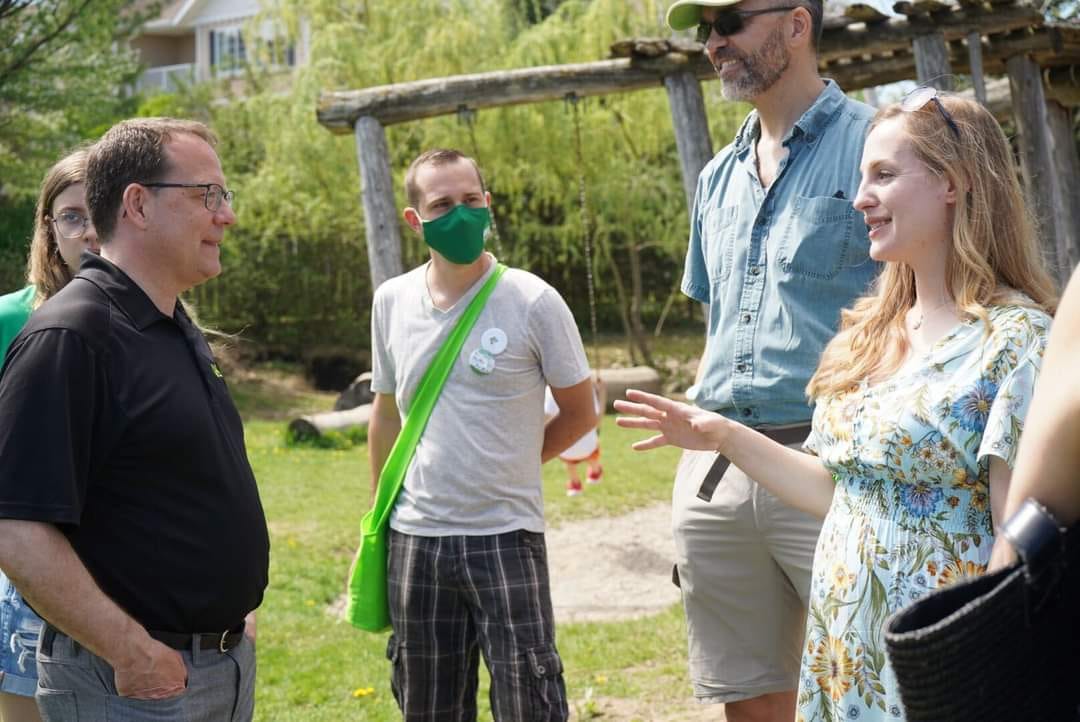
What’s notable about this approach is that canvassers are not trying to change voters’ minds. In fact, research seems to suggest that the impact of political party canvassing on persuasion is minimal.
“We argue that the best estimate of the effects of campaign contact and advertising on Americans’ candidates choices in general elections is zero. First, a systematic meta-analysis of 40 field experiments estimates an average effect of zero in general elections. Second, we present nine original field experiments that increase the statistical evidence in the literature about the persuasive effects of personal contact 10-fold. These experiments’ average effect is also zero.”
Kalla, Joshua and Broockman, David E., The Minimal Persuasive Effects of Campaign Contact in General Elections: Evidence from 49 Field Experiments (September 25, 2017). Forthcoming, American Political Science Review, Stanford University Graduate School of Business Research Paper No. 17-65.
Changing hearts and minds
While the effectiveness of “deep canvassing” for candidates may be limited, that does not mean the method is ineffective. The same researchers who exposed LaCour’s fraudulent data launched their own experiment a year later. This time, they tested deep canvassing methods on reducing prejudice against transgender individuals.
LaCour’s data may have been false, but it turns out his conclusion was not entirely wrong. The researchers — David Broockman and Joshua Kalla — published their data and methodology in a “landmark study of scientific transparency,” according to a reviewer.
“Existing research depicts intergroup prejudices as deeply ingrained, requiring intense intervention to lastingly reduce. Here, we show that a single approximately 10-minute conversation encouraging actively taking the perspective of others can markedly reduce prejudice for at least 3 months . . . For the intervention, 56 canvassers went door to door encouraging active perspective-taking with 501 voters at voters’ doorsteps. A randomized trial found that these conversations substantially reduced transphobia, with decreases greater than Americans’ average decrease in homophobia from 1998 to 2012.”
David Broockman, Joshua Kalla, Durably reducing transphobia: A field experiment on door-to-door canvassing. Science 352, 220-224 (2016).
The biggest difference between LaCour’s debunked report and the one published by Broockman and Kalla was to disprove one of the key limitations “found” by LaCour — someone did not need to be a member of the affiliated group to have a long-term impact. What was more important was ensuring canvassers had appropriate training.
“The intervention was effective among all prespecified subgroups, including political parties. Canvassers did not require extensive experience. Both first-time and experienced canvassers were effective, and most canvassers continued volunteering after the study concluded, indicating that organizations can develop activists who will work to widely deploy the strategy”
David Broockman, Joshua Kalla, Durably reducing transphobia: A field experiment on door-to-door canvassing. Science 352, 220-224 (2016).
Before political candidates start rewriting their entire campaign plans — while this strategy may be effective on specific issues, broader partisan support does not seem to be positively impacted by attempts at persuasion. In fact, research published the same year as Broockman and Kalla’s transphobia study suggests the opposite.
“Focusing on the canvassing treatment, we find that persuasive appeals had two unintended consequences. First, they reduced responsiveness to a follow-up survey among infrequent voters, a substantively meaningful behavioral response that has the potential to induce bias in estimates of persuasion effects as well. Second, the persuasive appeals possibly reduced candidate support and almost certainly did not increase it. This counterintuitive finding is reinforced by multiple statistical methods and suggests that contact by a political campaign may engender a backlash.”
Bailey, Michael A., Daniel J. Hopkins, and Todd Rogers. "Unresponsive and Unpersuaded: The Unintended Consequences of a Voter Persuasion Effort." Political Behavior 38.3 (September 2016): 713-746.
Go knock doors
There is no lack of research on canvassing, with more being produced every year. David Broockman, now an associate professor at UC Berkeley, is doing fascinating research on polarization. Joshua Kalla, now an associate professor at Yale, has continued to study persuasion. Despite the scandal of co-authoring a fraudulent paper, Donald Green continues to be a major figure in political science, recently publishing an updated book on how to increase voter turnout.
Your goal matters, though. Deep canvassing can be effective at persuading people on a specific issue, but does not appear to be an effective at rallying people around a candidate or party. On the other hand, focusing solely on voter identification and getting out the vote is unlikely to swing new voters your way — but an increase in turnout can flip a close race. Canvassing is ultimately a tool that campaigns need to use effectively.
If you have never knocked on a door, give it a try. At the very least, you will meet interesting people, better understand your neighbourhood, and get some exercise.
Thanks, Ry, for this interesting piece exploring varied effectiveness of different kinds of canvassing, relative to achieving different kinds of goals. My canvassing friends and I are discussing it, and we will keep exploring, learning, and putting these ideas to the test! And: I love the name of your Substack. ;)
thank you for reminding me and everyone else that this is an effective tactic. Of course it is not quarantine to work for everybody - just look at who voted for trump (did I hear some regret. too) or who did not vote at all... Get the ground game going now!