
The medium and the message
Entertainment is the gateway to information

For years now I have used YouTube for one purpose — listening to music. It is the one platform that I can consistently find various remixes and mashups of popular songs. I enjoy taking a song I am familiar with and listening to different variations of it. I rarely go to YouTube for anything other than music.
This is why it was a little surprising when YouTube’s auto-play decided to follow a remix of Axwell & Ingrosso’s Sun is Shining with videos from far-right Canadian media outlet Rebel News.
I tried reloading, I tried choosing a different remix, but no matter what I did, the next video was another Rebel clip.
YouTube is owned by Google, and presumably collates all the information Google has collected on my interests and preferences and decided that what I really wanted to watch — contrary to years of using the platform entirely for music — was far-right rage-bait.
YouTube has long had a problem with its algorithm putting misinformation, conspiracies and abusive content in front of its viewers. Researchers conducted an experiment where they simulated a nine-year old viewer who followed YouTube’s recommendations and ended up being fed dozens of graphic videos about school shootings, tactical gun training videos and how-to instructions on making firearms fully automatic.
For me, trying to listen to dance music, it is annoying. However, this problem is reshaping how people find information, and what information they find — three-in-ten (31%) Canadians say they rely on social media for election news. For the youngest generation, that number reaches 58%.
Video killed the radio star
Prior to social media, there were three ways I would get news — newspapers, radio, and television. While I would eventually start going directly to these platforms for news, when I look back I did not start wanting to be informed.
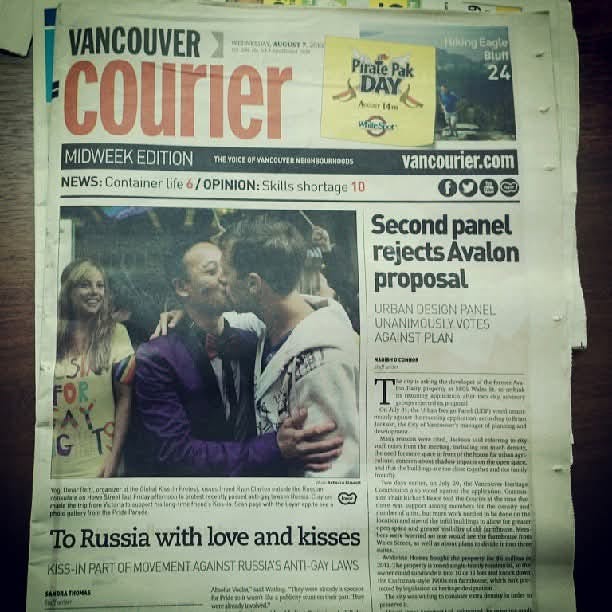
I first started picking up copies of the newspaper not for the news, but for the comics. I would skip past the headlines to the latter half of The Province so I could read through the two pages of humour and satire contained in comics like The Far Side and Pearls Before Swine. For years, that was the only reason I picked up a paper. However, as I grew into a socially-conscious teenager, I started reading the top stories before I would flip to the back. Then I started reading most of the news stories.
A similar evolution happened with radio. Originally, I would have the radio on while I was driving so I could listen to a variety of music instead of the four CDs I owned. When a news segment came up, I would switch through the stations to continue listening to music. But eventually, I started being interested in what was going on — especially locally — so I would leave it on during the news. Finally, I started listening to talk-radio like CBC and CKNW. But that’s not why I first turned on a radio. I started just looking for some new music to hum along to.
Television was the same. I did not turn on the television to watch the news, as a teenager I turned on the news because it ran in the time between when I got home from school and when Judging Amy was on. But, much like newspapers and radio, as I got older I became more interested in what was happening around me and the nightly newscast became a part of my evening routine.
In each case, what brought me in was entertainment, and becoming informed was a byproduct.
It was understood early on that platforms for entertainment also have the powerful potential to influence people. Part of the reason television stations devote time to any news at all is because of a Federal Communications Commission rule in the United States called the “Fairness Doctrine”. This doctrine, which was a component of the renewal of a broadcast license, mandated broadcasters “devote time to contrasting views on issues of public importance.” A regular newscast satisfied this requirement.
While the Fairness Doctrine was repealed before I was born, it was deeply embedded in the structure of television broadcasts, and continued to be something broadcasters built into their programming for many decades.
This meant that people tuning in to watch the latest episode of Friends would also end up watching some news, even if that time was used to make popcorn or use the washroom. This also meant that people all over a region — or a whole country — would have access to similar information. In 1983 when 105 million people watched the finale of M*A*S*H, television broadcasters had unprecedented access to people’s attention. For those who turned on their televisions a little early, they watched CBS Evening News with Dan Rather.
Chasing views
Like many of today’s social ills, the decline of news platforms can be traced to the spread of the internet in the 1990s.
Much like flipping directly to the back half of a newspaper to find the funnies, the internet made it easy for people to access the entertainment of their choice without having to sift through the local news first. I remember being a precocious teenager first using dial-up internet to find the Archie Comics website. Soon I learned how to use LimeWire to watch movies without having to find the right channel and wait for the time slot it would be on. By the time I was graduating high school, I had a collection of enough CDs I did not need to listen to the radio when driving.
If my interest in seeking out news on current affairs had not been firmly established by then, I might have stopped reading or watching news altogether.
Platforms needed to quickly adapt to the cultural shift the internet brought with it. Radio stations, unable to remain competitive with advertising revenue moving online, were bought up by large corporations and started to broadcast content chosen through “increasingly uniform and narrow profit-driven criteria.”
Newspapers also suffered, rapidly seeing advertising revenue dry up. The costs of a print newspaper, compared with publishing something online, made many smaller, local papers vanish. Once again, large companies bought up struggling papers and consolidated them, leading to broad, generic content. In British Columbia, that was Black Press, which was just sold to a group of investment firms.
Meanwhile, reporters, who actually conducted the research that informed the news, saw their job prospects collapse, with constant rounds of layoffs and job cuts.
Unfortunately for local coverage, in the quagmire of all the news from all the world competing for everyone’s attention at the same time, it’s hard for a story to even get in front of anyone, much less keep their attention.

The last model
There is one model of news and entertainment that is still holding some of its audience, though it is waning — late night.
Even as a teenager who did not watch any late night programs, I knew the names Carson, Leno and Letterman. These titans of television were able to merge several different elements into a behemoth of broadcasting.
For most televised newscasts, stations do not simply show you a file from a reporter and call it a day. A news anchor sets the stage, provides context and tone, and interprets the days events for their audience. Late night hosts took this to another level, presenting the news of the day and then exploring it in depth with commentary, guests, and wrap-around entertainment to keep the audience engaged. Music, comedy, and heads of state all in one place.
The power of reaching an engaged audience has not been lost on politicians throughout the ages. Richard Nixon appeared on Johnny Carson’s The Tonight Show in 1967, making jokes about his earlier challenges to impress viewers during his failed presidential re-election campaign. In 2006, Prime Minister Stephen Harper did a whole segment with Canadian host Rick Mercer. Current Prime Minister Mark Carney soft-launched his bid to lead the Liberal Party on The Daily Show.
Shows like The Colbert Report, Saturday Night Live’s Weekend Update, and the delightfully Canadian This Hour Has 22 Minutes have managed to persevere and still provide their audiences with important information by merging the entertainment with the content. Part of this is functional — in order for audiences to understand the humour, they need to know the context. Informing people about what is going on is an essential part of satirizing it.
Modern late night shows devote significant blocks of time to filling in their audience about what is going on in the news. Colbert, Kimmel and Meyers start all their shows with a monologue. Last Week Tonight with John Oliver is basically an hour-long monologue with non-sequiturs and jokes to break up the drier content.
The fusion of information and entertainment may be why, for a time, Pew Research Center found that 21% of US residents aged 18 to 29 cited The Daily Show and Saturday Night Live as a place where they regularly learned presidential campaign news.
There are other variations of this model. Howard Stern and Rush Limbaugh popularized “shock radio” where the audience would be delighted by their bombastic coverage of current events. Joe Rogan has mastered bringing in audiences to the podcast format.
Of course, The Daily Show is not news — something Jon Stewart and the show’s writers regularly remind people. While they air clips of segments prepared by actual journalists, they are not the ones paying those journalists’ salaries to go out and report.
These shows also run into a similar problem as the mega-corporation-owned newspapers and radio stations. In appealing to as wide of an audience as possible, they end up being generic and predictable. While I often watch clips of these shows here and there when they show up on my social media feed, it has been years since I sat myself down and watched an entire episode.
Where did you come from, where did you go
In 2023, young people aged 15 to 24 in Canada were more likely to get their news and information from social media than any other method. While many people, like me, have seen clips of late night shows on social media, only a quarter of people in the US say they actually watch late-night TV shows as they air.
Four out of five people in Canada (86%) read news content each week, but unlike when I was a kid flipping through the pages to find the comics, people are reading online. Most readers are unlikely to skim through multiple pages on a single news site. Still, in British Columbia, 51% of people are still read printed papers weekly, and 65% read monthly.
While trending lower each year, radio remains popular at 64% among all adults, compared to 76% in 2021. Podcasts continue to grow in popularity, reaching 29% of Canadians per week, up from 22% in 2021.
But the media landscape has changed dramatically since I was a teenager. Instead of being a part of an overall entertainment package — nightly entertainment with information built in — content is highly curated and personalized. It also means that media producers can find ways to manipulate the algorithm to put their content in front of your eyes — regardless of whether it is accurate or not.
This is how a remix of a light-hearted pop song allows far-right videos to reach me while I am trying to rake leaves.
For news — real, informative news — to survive in this ecosystem, producers need to recognize that entertainment has always been a pathway to provide information. Those who care about people being informed need to adapt quickly.
Very in depth piece Ryan, as a 70 yr old I was very interested in what's up as I have always read newspapers, still do. I'm not alone in being pissed that regional papers are almost non-existent now. I've always been a late-night show watcher but find myself tuning in to a lot of podcasts now. All the best to you and keep up the great work.
Thanks for this. I've stopped buying the argument that the late night shows aren't news in the US because all of them employ fact-checkers (and comedy doesn't need to be fact-checked) while the "news networks" fill most of their airtime with commentary and "analysis" (not fact-checked). And Last Week Tonight does the kind of in-depth reporting than 60 Minutes used to and just presents it with added snark & silly.