
Vanishing history
Our stories are disappearing

“Every record has been destroyed or falsified, every book rewritten, every picture has been repainted, every statue and street building has been renamed, every date has been altered. And the process is continuing day by day and minute by minute. History has stopped.”
― George Orwell, 1984
A couple weeks ago I had the pleasure of walking in a Pride parade in my hometown. It’s something that would have been unimaginable to my teenage self. While most of the people I grew up with had a kind of live-and-let-live open mindedness, the idea of a formal Pride parade was something only found in cities. It was a great event, well-attended, with lots of people out to celebrate along the streets (it helps it was at the same time as the Farmers Market, which is always popular).
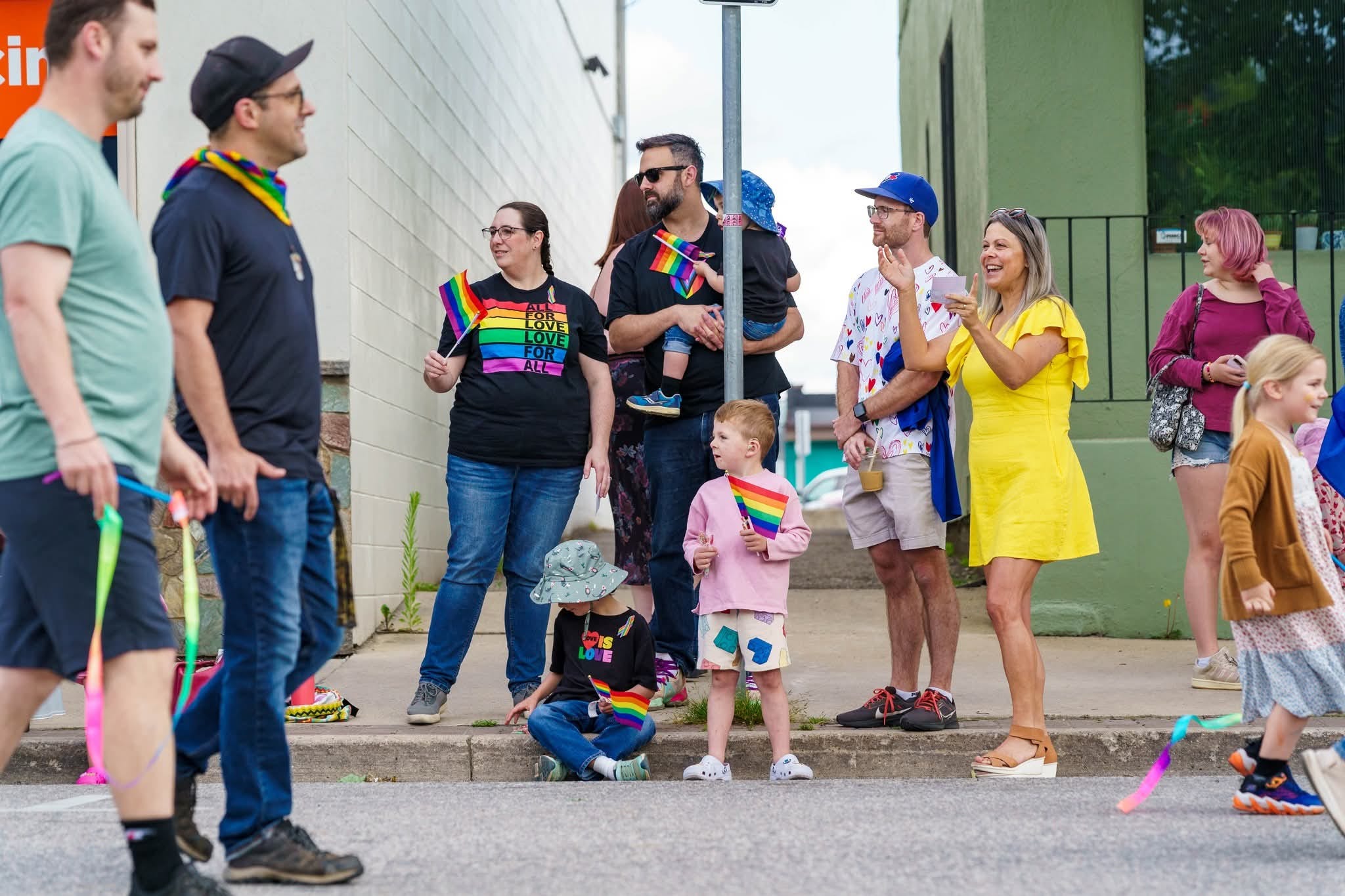
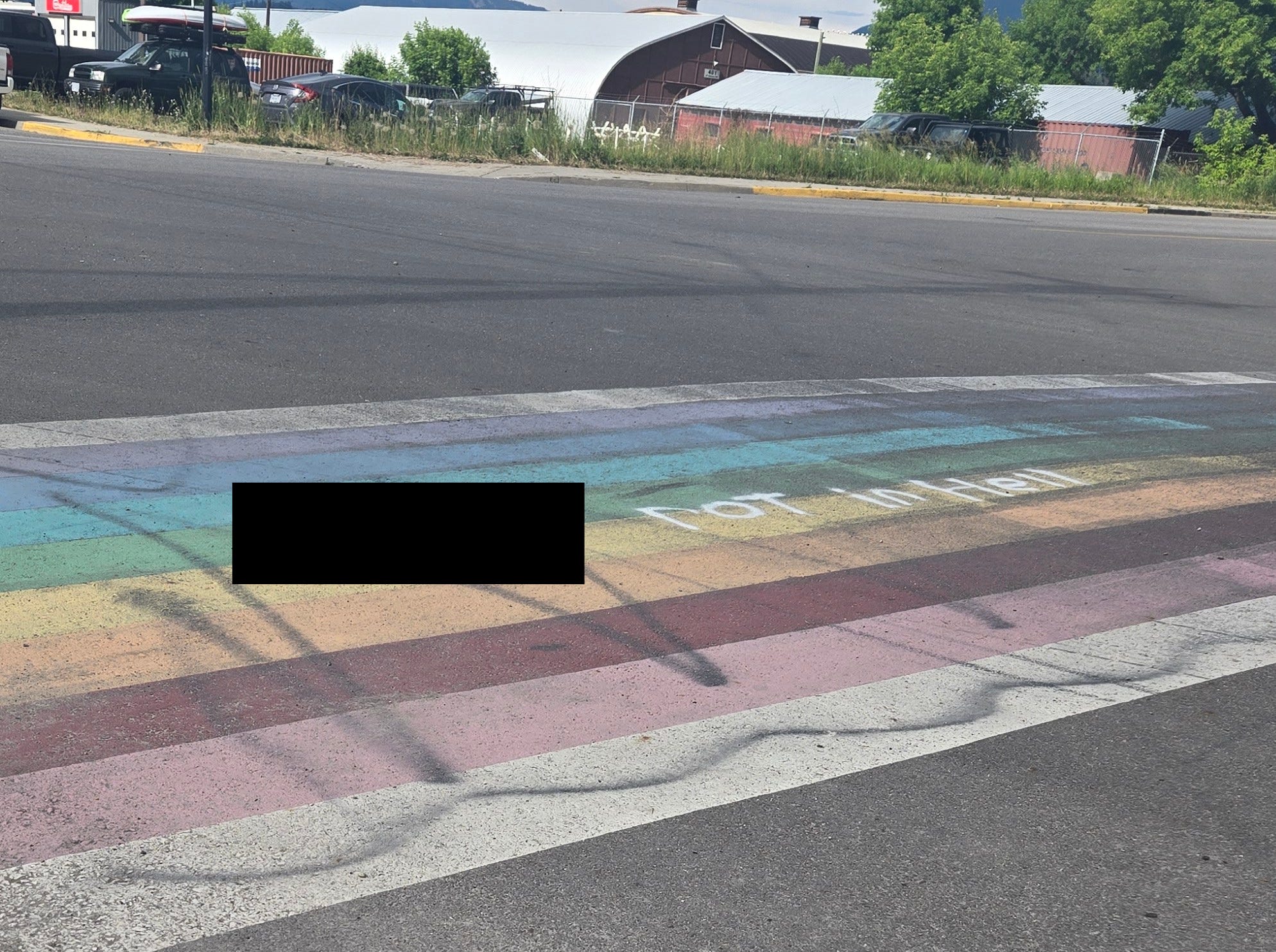
The event was promoted as Salmon Arm’s first ever Pride Parade, though there have been other kinds of events through the years. In previous years, picnics have been held, and the group that organized the parade, the Pride Project, started running small festivals in 2020. The city even has rainbow crosswalks, though they are always vandalized.
However, in what was likely a result of muddled memories over the years, I was sure that Salmon Arm had held a parade at least once before. I asked my sibling, and he thought the same, but could not remember when. So I turned to the internet.
I was surprised that, as I tried searching for various keywords, I could not find anything useful. I don’t mean whether or not there was a previous parade, but nothing about anything other than coverage of this year’s parade. Nothing about the previous years’ festivals, nothing about the picnics in the past, nothing about older organizations that have existed in the community. I know those things happened, and were covered by the local paper. I tried a few more keywords. Nothing relevant.
Eventually I stated using some very specific searches, and was eventually able to find details about the first Pride Project event in 2020. There was a “read more” link deeper in the article to coverage of a 2017 picnic, but it went to a blank page. Almost all the “read more” links went nowhere.
At home I have a couple newspaper pages framed — significant events in my life where I received some kind of media coverage. Looking at them, I wondered whether they existed online.
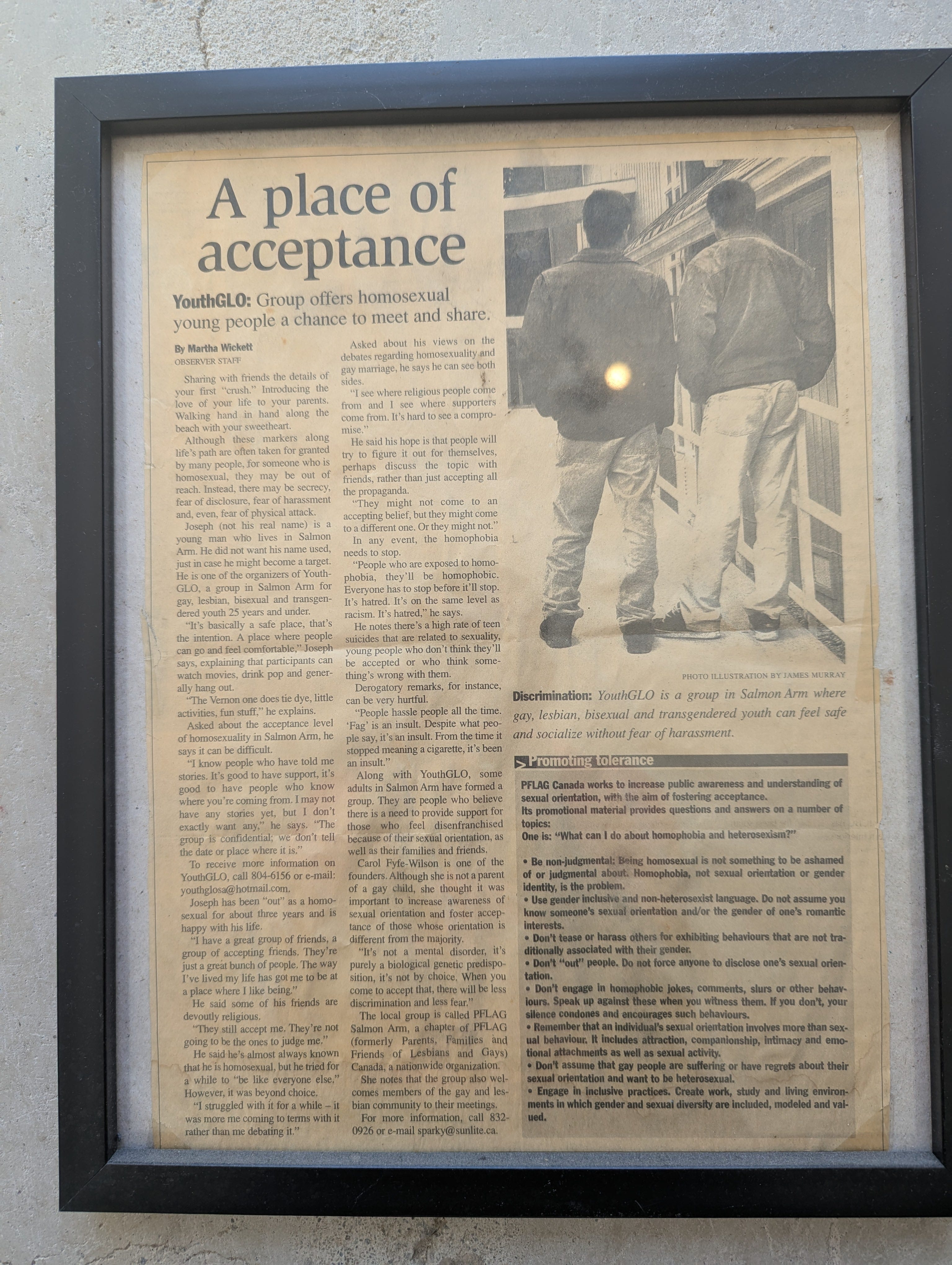
The first was not surprising, it was an article written in 2004 about a queer youth drop-in I had been involved with in Vernon and Salmon Arm. Newspapers were still the primary source of local news, and it was probably never posted online. Even looking up the exact title, publication and reporter yielded nothing. As far as the internet is concerned, it did not happen.
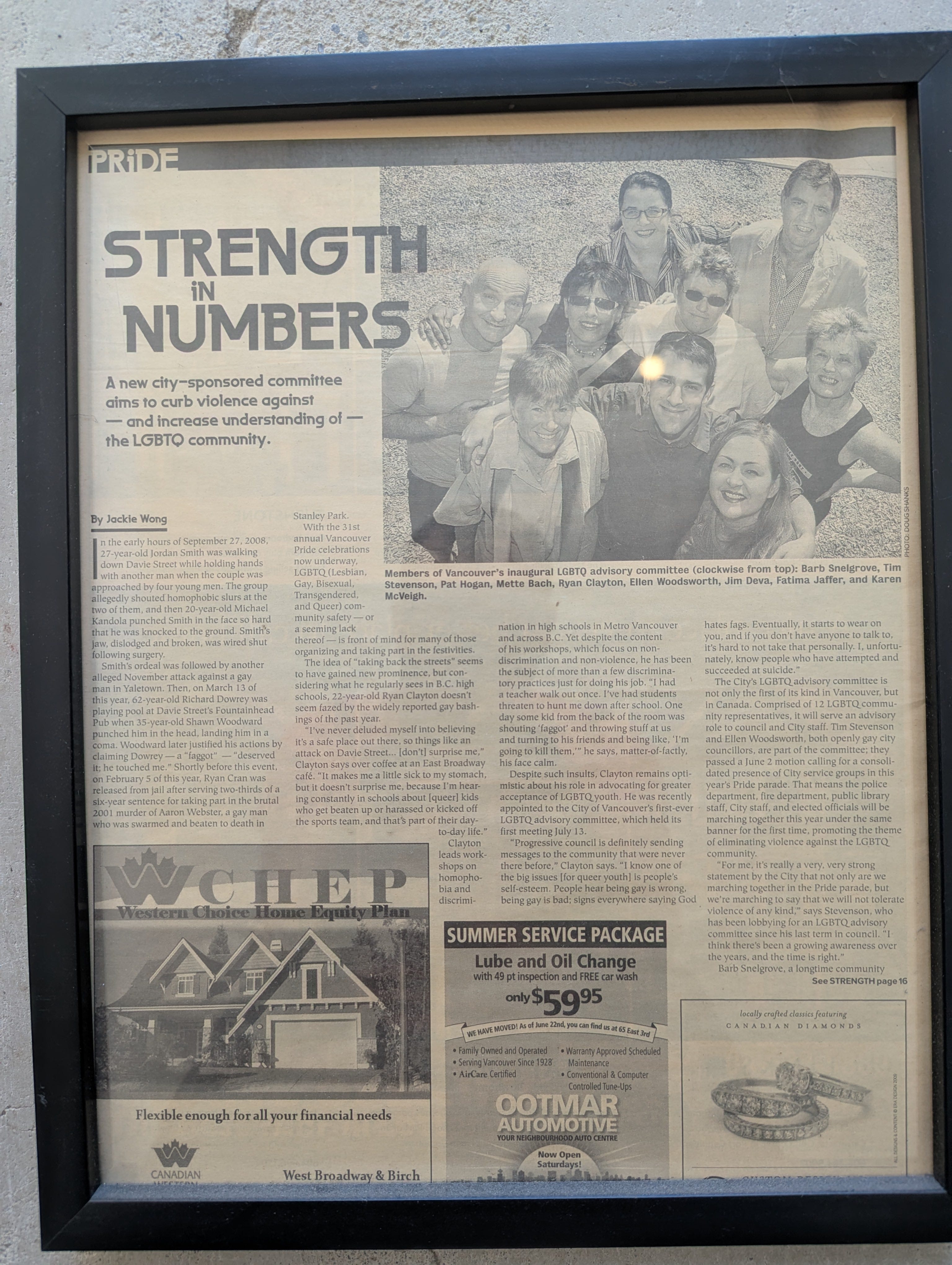
The second, coverage of the creation of the first civic LGBTQ committee in Vancouver, also had no results. The Vancouver Courier, which had featured the article, shut down in 2020 and I could not find an archive of previous articles. I looked up the title, the author, and key words but nothing came up.
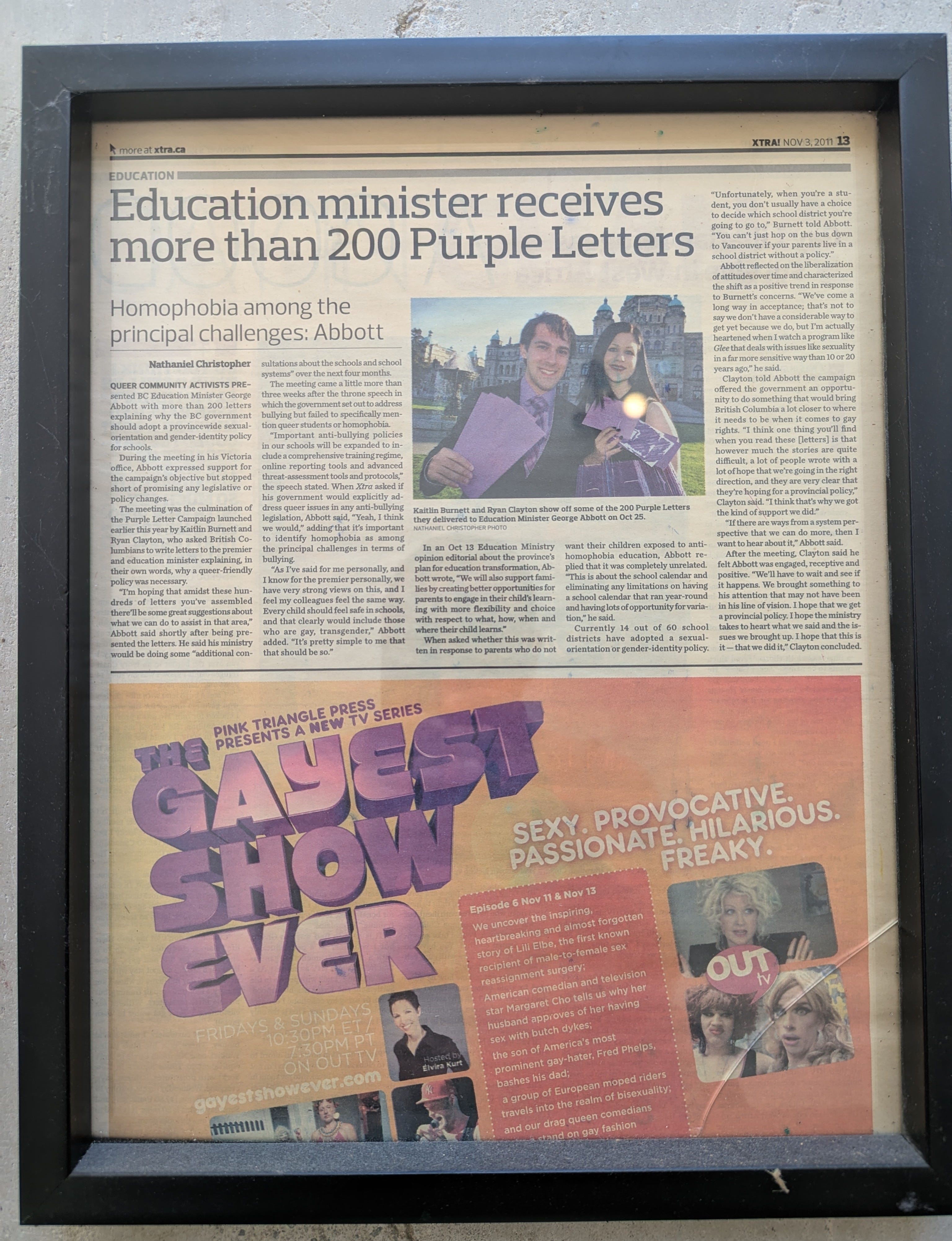
Finally, I looked up the most recent. This one I even had the date for, and it is maybe the one I’m the most proud of. It was coverage of the time we delivered hundreds of letters to Minister of Education George Abbott calling for provincial anti-homophobia and anti-transphobia policies in BC school districts.
It took multiple tries, and only when I added my own name to the search terms did it come up. However, Xtra West, which published the article, no longer prints newspapers and largely operates out of Toronto now.
It suddenly occurred to me that, in the modern day of algorithm-led searches and vanishing local media, there’s no real way to figure out through the internet if Salmon Arm ever had a Pride parade before. As far as the internet is concerned, history began in the new millennium, when articles began being uploaded to the web. Even if a piece of writing covered the past, or was from the past, it only appeared online when someone uploaded it. As newspapers close down, so too do their databases and archives.
Out of curiosity, since so many people are using large-language models for research, I checked what they produced. Google’s summary confidently asserted that Salmon Arm’s queer community’s history began in 2025. Anthropic’s Claude produced a response that said, “there’s no comprehensive published history of LGBTQ life in Salmon Arm before the 2010s.”
But there was. In 2004 the local paper published a profile of a high school student who used a pseudonym out of fear for retribution, and I have no doubt the paper received plenty of negative letters in response. There was a queer youth drop-in, small community events, and a chapter of PFLAG that had been around since before I knew what gay was. Every summer there were dances — I used to drive all over the region to attend them. Kamloops, Kelowna, Vernon and Penticton all had various queer community events I used to go to, but no matter how specifically I searched online, there’s no record of them.
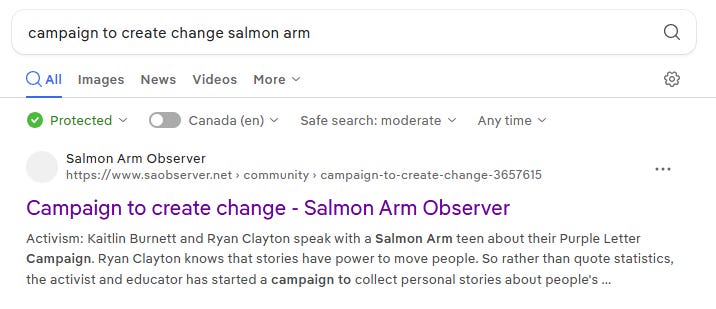
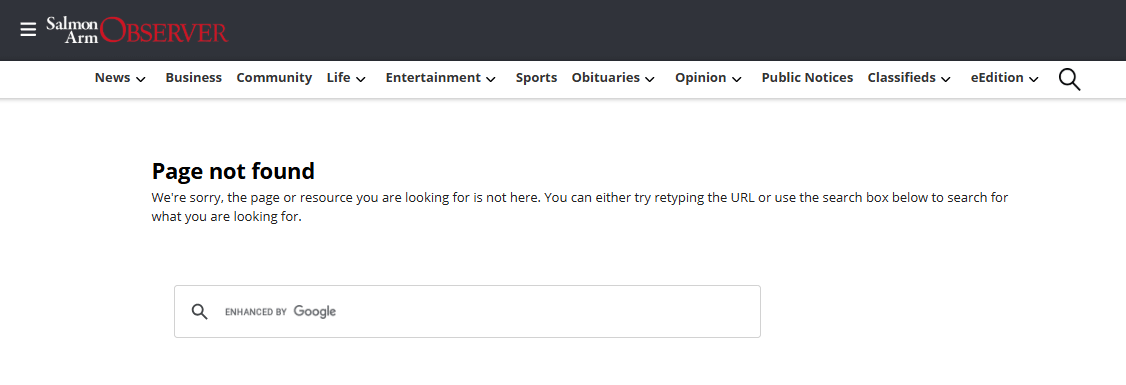
When we came to Salmon Arm during our summer of advocacy around anti-homophobia policies, the Observer covered our event. Search engines even remember the page, but it just goes to a dead link now. Even the mighty (and increasingly important) Archive.org couldn’t find it.
When Facebook was new and people were just starting to realize photos posted online could be used against you later in life, there was an adage that “the internet is forever”. But instead, pieces keep falling away. Local news, histories of small communities, pictures and profiles — these seem even more fragile online than they were in paper form.
I do believe I ultimately misremembered Salmon Arm having a previous Pride parade. But that does not mean there hasn’t been a rich history of queer lives, advocacy and community.
No large language model could possibly know about it. No search engine knows where to look. It’s simply not online. Which makes me think about how much knowledge is also not online, or inaccessible. I assume one day this blog will also vanish into the ether.
The more unreliable the internet becomes, the more important those stories — the ones we remember because we were there — will become.
For the record — for as long as this is online — Salmon Arm’s first Pride parade was a blast. There was a big group of colourful marchers, plenty of people cheering along the sides of the streets, and rainbows everywhere. I saw old friends and new, ran into people I had not seen since high school, and felt great joy that my hometown had a created a space for me and the people around me to celebrate. The drag brunch that followed the next day was delightful as well. I hope they do it again next year.
You might already know this, but the internet archive has copies of Salmon Arm Observer going back to 2004. Probably not every article or every link, but it might have the information you’re looking for.
https://web.archive.org/web/20040000000000*/https://saobserver.net/
Thanks for raising this issue. Preserving our history is important. I did some research in Kelowna around 2013 and found a similar issue with online records. What I did learn is that the library has microfiche records of past newspaper print issues, so if you know a date window to search in it is possible to find articles and print them. Happy Pride, Ryan!