
Jokes on you
If politics is a circus, send in the clowns

In Canada, we tend to have a healthy irreverence for political leaders. We don’t take them too seriously so that they do not take themselves too seriously. Many politicians have bemusedly accepted the brunt of mockery from This Hour has 22 Minutes or Royal Canadian Air Farce, and our previous three Prime Ministers all appeared on Corner Gas (albeit one animated). There were jokes earlier this year that Prime Minister Mark Carney might appear on the next season of Heated Rivalry. With our roots in British parliamentary democracy, we have carried on their rich tradition of laughing at people in power.
The internet has been abuzz about a perennial novelty candidate running in an upcoming United Kingdom by-election. The by-election was called because Nigel Farage, the leader of the Reform Party, is being investigated for failing to disclose a £5,000,000 gift from a cryptocurrency billionaire and staff, security, and the use of a townhouse near Buckingham Palace from a convicted fraudster, which are extremely suspicious things for a Member of Parliament to do. In order to suspend the investigation, Farage vacated his seat as an MP, but intends to run in the by-election. If successfully re-elected the investigation will resume, which makes the whole thing seem fairly ridiculous.
The major parties in the UK all called the by-election a farce and refused to participate, leaving Farage to run largely unopposed. That is, until a certain intergalactic space warrior decided to put his name forward.
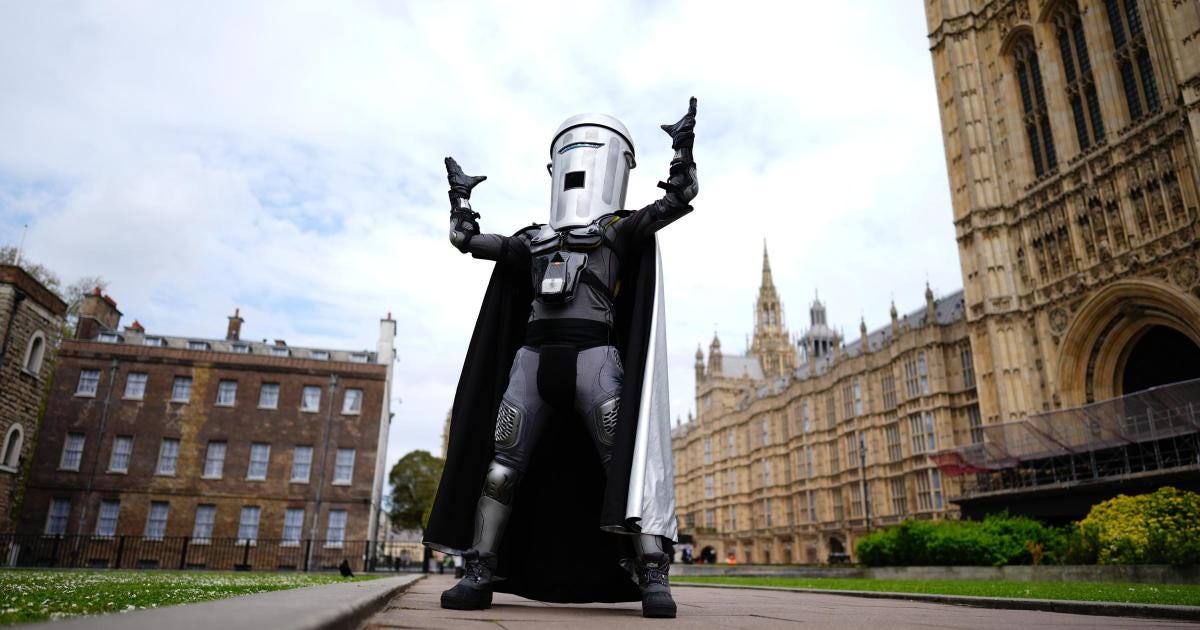
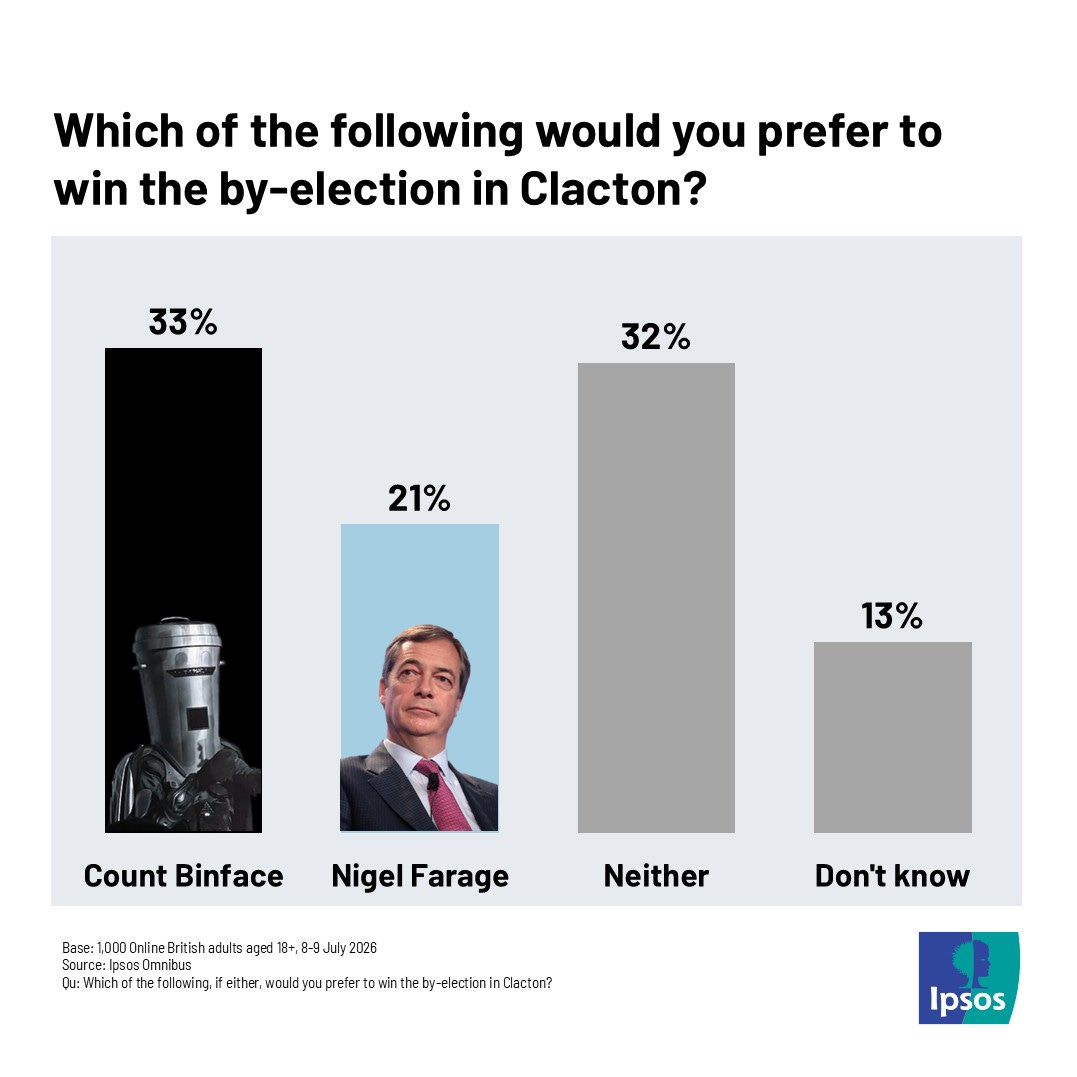
With tongues firmly in-cheek, people from all across the political spectrum have come together to support the caped man with a garbage receptacle for a head. The Chancellor of the Exchequer accepted Farage’s resignation saying, “It is a farce and a desperate distraction, and the people of Clacton deserve better, but if he wants to spend the summer arguing with a bin, I won’t stop him.“ The Conservative Party leader Kemi Badenoch speculated, “If it’s the people versus the establishment, I think Nigel Farage might be looking like the establishment, and Count Binface may be the people.” Labour donor and supporter Dale Vince offered to support the Count, telling the Daily Mail, “I want Binface to win, and I am prepared to support him – morally, verbally and financially if that works for him.” An Ipsos UK poll of British voters showed 33% would prefer Binface over 21% for Farage.
His pitch to voters is simple: “I’m not Nigel Farage.”
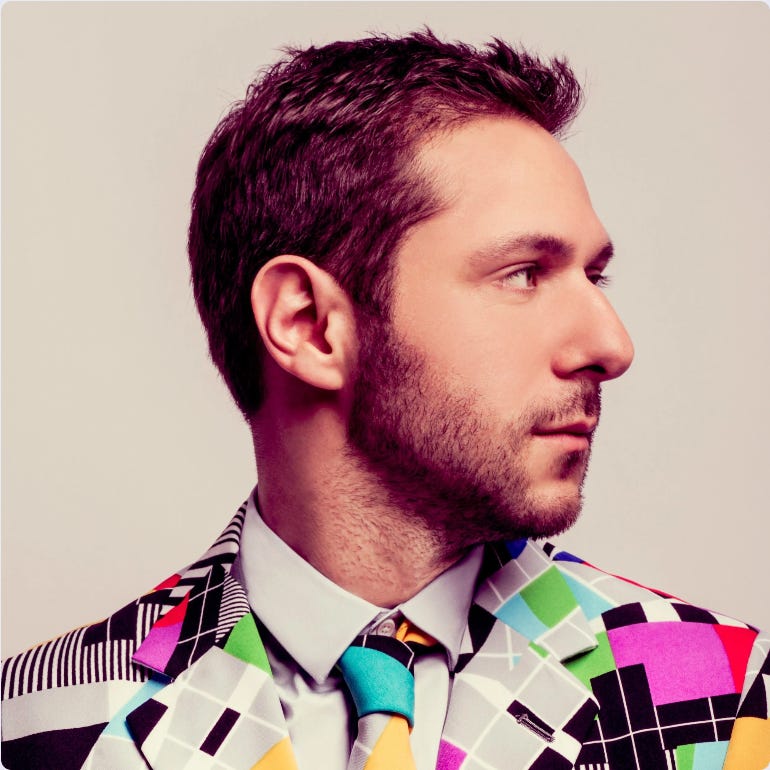
Count Binface is, in fact, comedian Jonathan Harvey. As a writer, director, and producer he has worked on shows such as the satirical BBC quiz show Have I Got News for You, the acerbic political comedy The Thick of It, revivals of the satirical Yes Minister, and Last Week Tonight with John Oliver. He has decades of experience lampooning politicians and political issues.
While it is unlikely Binface will be elected to the UK parliament, satirical candidates are an important part of democracy, finding creative ways to hold politicians to account and draw attention to more absurd aspects of electoral politics. Satirical candidates have a long history in the United Kingdom and in democracies around the world and remind people that in a democracy, even the most ridiculous can participate.
Previously on… Canada
Canada is no stranger to strange politics. The most famous is the Quebec-based Rhinoceros Party, which has been running candidates since the 1960’s and previously pledged to reform lottery laws by replacing cash prizes with Senate seats, create employment by paving the Bay of Fundy, and make the UK Canada’s 11th province. The party has never elected a candidate, but did place second in Laurier in 1980, finishing ahead of the New Democratic, Progressive Conservative and Social Credit candidates.
The Rhino Party is still around, with a platform that says “THE number one priority” is defense, the economy, education, employment, the environment, justice, Canadian heritage, international relations, health and public safety. Each category has a series of promises, each more absurd than the last. The party received 0.04% of the national vote in the 2025 election, placing them ahead of the Libertarians, Marxist-Leninists and Communists.
In the early 1970’s a man dressed as a peanut walked into Vancouver city hall and registered to run for mayor as “Mr. Peanut”, the mascot of Planters peanuts. Artist Vincent Trasov delighted people on the campaign trail with his surreal character, which included a five-piece band, back-up dancers, and a platform of “Performance, Elegance, Art, Nonsense, Uniqueness, and Talent.”
“I was an official candidate. They couldn’t dismiss us or say we weren’t part of the mayoralty campaign. They had to give me time. They had to give me the stage.”
Vincent Trasov, Montecristo Magazine, December 23, 2024
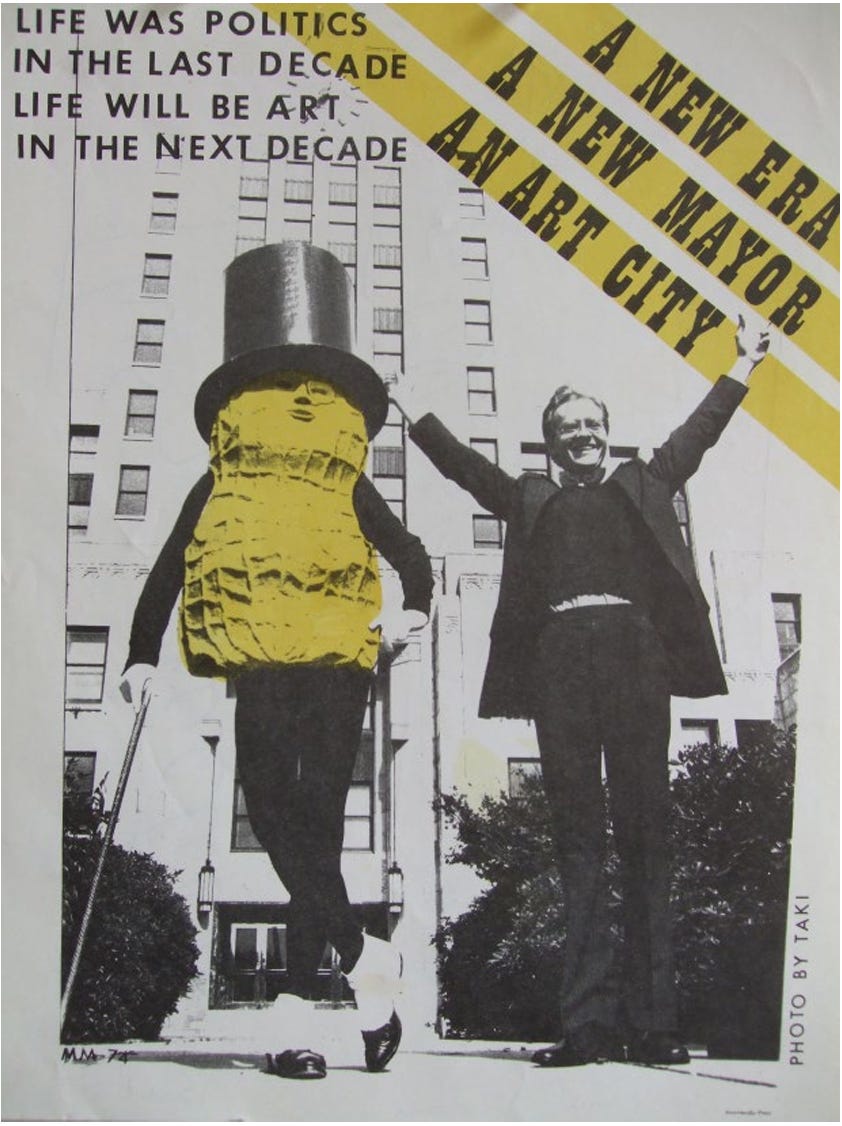
Mr. Peanut’s campaign gave people an outlet to express frustration with the state of democracy. The Province’s James Barber wrote, “the size of the Peanut vote will be important in a number of civic elections in North America because it will indicate the groundswell of resentment which ordinary people are feeling against manipulative politics which deny human rights.”
Mr. Peanut received 3.4% of the vote, losing to Art Phillips.
“These candidates draw out opportunities to see problems in how their democracy works in a clever and easy-to-remember way. The media likes covering them, they get disproportionate attention, and can draw attention to whatever bothers them.”
Sophia McClennen, Professor of International Affairs at Penn State, April 6, 2025
Send in the clowns
Comedians and satirists who put themselves forward as an absurd candidate take on a huge risk — they might win.
On the east coast of the United Kingdom is the borough of Hartlepool. In 2001, the region voted in a referendum to have a directly elected mayor instead of the more common leader and cabinet model where elected councillors choose one of their members to be the leader of the council. The mascot of the local football team, H’Angus the Monkey, decided to put his name into the ring to become mayor.
Labour, who were in power under Tony Blair at the time, were expected to win the mayoral election. The Liberal Democrats and Conservatives were not popular in the area, leaving Labour to face an independent businessman and a man in a monkey suit. H’Angus ran on giving free bananas to local school children.
Voters instead rallied around the mascot, supporting his bid and electing him to be the borough’s first ever mayor. They seemed to have been happy with their choice, as they re-elected him twice. Stuart Drummond, as was his actual name, was the only person to ever serve as mayor for the borough — they abolished the position in 2012 and went back to the leader and cabinet model.
In Brazil, in the lead up to the 2010 election, an actual circus clown sought to be elected to their Chamber of Deputies. Tiririca, whose real name is Francisco Everardo Oliveira Silva, ran in-costume on slogans like “What does a federal congressman do? Actually, I don’t know — but vote for me and I’ll tell you.”
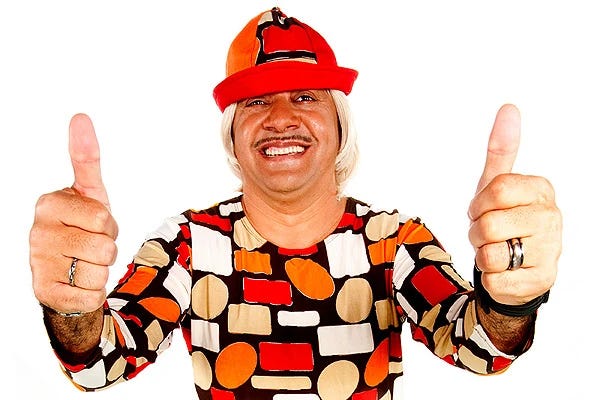
Silva’s campaign had a degree of seriousness to it — he joked about how he knew little about politics but he wanted earnestly to serve. On election night he received the most votes of any candidate — more than a million people voted to elect a professional clown to represent them. He took the job seriously, being one of the only deputies to never miss a vote. He was re-elected thrice and continues to serve in the Chamber, though he does not plan to run for re-election this coming fall.
“There are a lot of good people, yes, but the system is broken. The things I’ve seen here, let me tell you… What can I say? It’s a circus.”
Francisco Everardo “Tiririca” Oliveira Silva, Reuters, January 20, 2013
But perhaps the most famous is the story of a plucky young comedian who played a fictional president on television. In Servant of the People, Vasyl Petrovych Holoborodko is a school teacher who decides to run for office after a rant at his students about government corruption goes viral. Thinking his campaign would just raise awareness and speak truth to power, he ends up winning and becoming president.
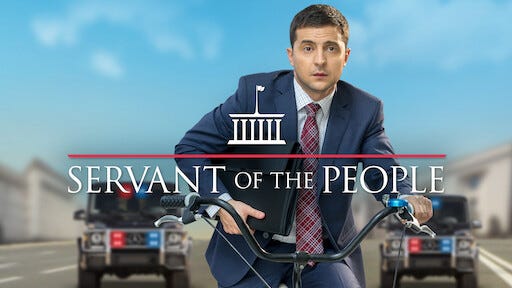
In real life, Volodymyr Zelenskyy was a comedian who effectively satirized the frustrating state of Ukrainian democracy and then decided to run for president himself. The campaign was genuinely aiming to win, but his approach included stand-up comedy routines and a focus on social media.
Ukrainian voters were dissatisfied with government corruption and the early war with Russia, and further fatigued with business oligarchs, which incumbent President Petro Poroshenko was. Zelenskyy, running with the Servant of the People Party, won 30.61% on the first round of ballots, and 74.96% on the second when the other candidates were eliminated and it came down to just him and Poroshenko.
To say he has gone on to be an important world figure would be an understatement. He was named Time’s person of the year in 2022 and has become the face of resistance to Russian militarism. In light of the decline of the United States on the world stage, the New York Times called Zelenskyy the new leader of the free world.
Binsanity
In 2024, Clacton elected Nigel Farage with 46.2% of the vote, defeating the Conservative incumbent, who received 27.9%. The constituency is reliably right-wing, electing either Conservative or UK Independence candidates since its creation in 2010. It is possible, however, that the people of Clacton may decide they have had enough of the shenanigans of Farage and his millions in undeclared donations. Unlikely, but possible.
However, what Count Binface represents is a healthy democracy; one where a comedian can put their name forward, run on a platform of mocking and satirizing politicians, and appear on the ballot like anyone else. And if the people of Clacton want, they can vote for him and he could be elected.
Nigel Farage is the leader of a major political party, one that is polling high enough he may one day be Prime Minister. He is incredibly wealthy and well-connected. He is a powerful man in British politics. And a man wearing a bin on his head is going to spend the summer democratically lampooning him.
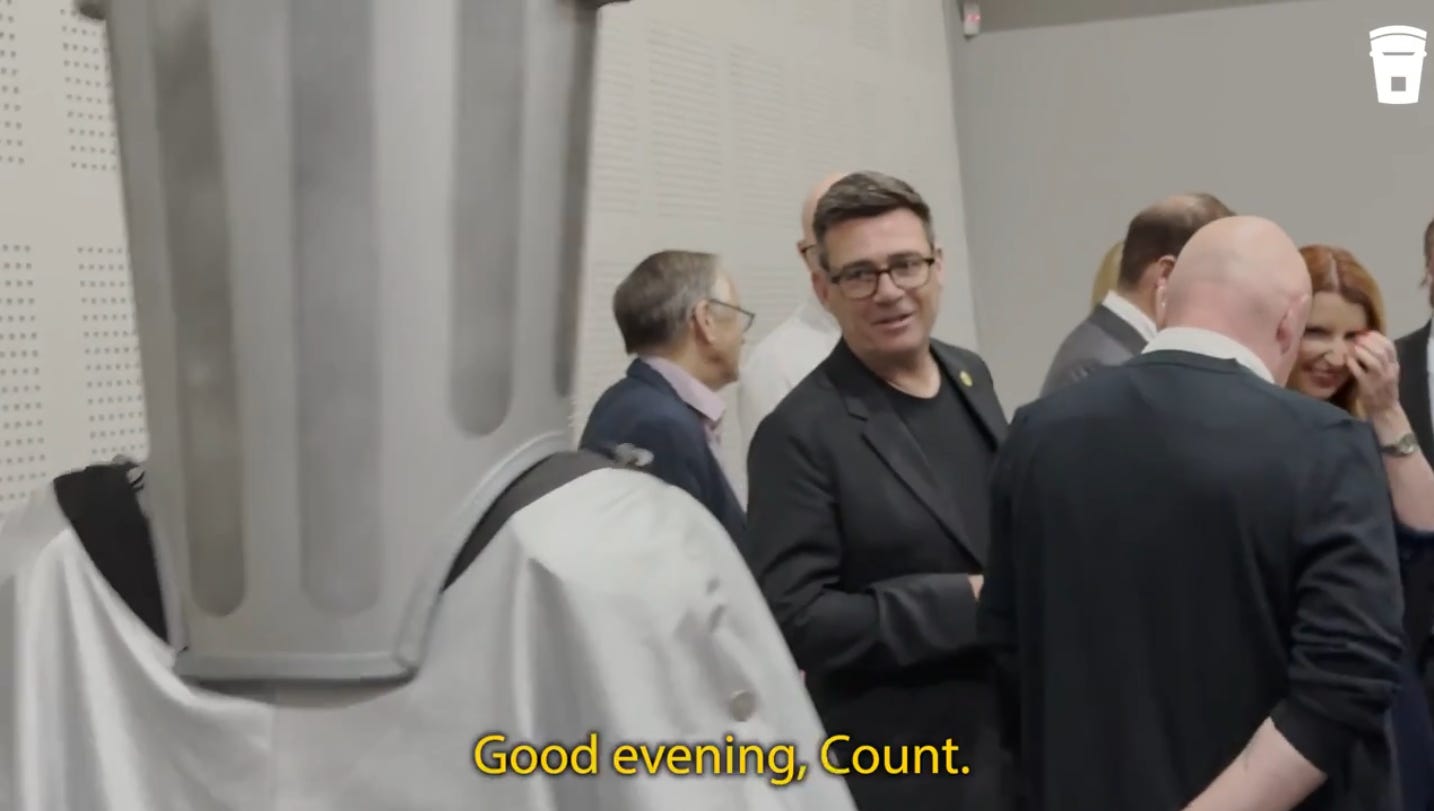
He also ran against newly appointed Prime Minister Andy Burnham in Makerfield, where he leveled some solid criticism at the man who replaced Keir Starmer as leader of the Labour Party. Burnham has since endorsed Binface for Clacton.
In Poland, a writer had to spend years defending himself in court after calling their President a “moron”. Many European countries still have laws on the books banning people from insulting their leaders. A joke at a politician's expense can get you a home visit from the Federal Bureau of Investigation in the United States.
For Brits, being able to make fun of politicians on an election stage is a sign of how robust their democracy really is. If a comedian in a trashy outfit can run for office, so can you.
Voters in Clacton have an alternative if they do not want Nigel Farage to represent them anymore; one that wears a bin on his head and promises to build at least one affordable house — which is more than some “serious” politicians manage in their entire career.
The Clacton by-election will take place on August 13th.
“I say to you all, GO. Whoever you vote for, VOTE. Democracy is a rare and precious thing. . . In the UK you can vote for whoever you want, and you can even stand for election no matter what you believe and no matter how ludicrous you might look. That’s amazing.”
Count Binface, 2026
You may also enjoy…
The cancel caucus cometh

Way back in 2007 I lived in Vancouver, and was tangentially connected to the comedy scene through an improv troupe. Around this time, a comedian named Guy Earle performed at a Commercial Drive venue. It did not go well.
Six ways candidates lost my vote

Since I turned 18, I have voted in six provincial elections, six federal elections, and six municipal elections, as well as a handful of leadership races, nomination contests and plenty of internal elections. I don't miss an opportunity to vote.
The art and the artist

When I was a teenager, I was a voracious reader of fiction. Perhaps it had to do with being a queer kid in a small town, but I enjoyed spending more time in fantasy worlds than the real one. I would read every night, often well into the early morning, which would lead to falling asleep in class. I frequently had more than one book on the go at a time.
Wow. I thought I was the only person nerdy enough to remember Mr. Peanut - and his real name. Thanks for this.
Don’t forget the referendum to rename the Northwest Territories and how they were almost named “Bob”. We have a sense of humour too. Bob should have won.