
Schrödinger's Opposition
When is a leader no longer a leader?

“They’re like praying mantises, they eat their leaders.”
Former BC Conservative Party leader Dan Brooks, October 28, 2016
One of the challenges of being deeply interested in governance and politics is that other people often find it dry and boring. It is hard to get people excited about a six-hour committee meeting on the nuances of education policy. This is why people tend to associate politics with the more exciting parts like elections and question period, even though most of the actual work of governing happens outside of those things.
Last week, on the other hand, got everyone's attention.
The final day of the legislature sitting this fall ended up having little to do with responsible and level-headed governance. Instead, it was a level of dramatic tension and confusing plot lines that would make Eric Kripke blush.
On Wednesday morning, John Rustad walked into the Legislative Assembly the leader of the opposition. By the end of the day no one knew what, exactly, was going to happen to the BC Conservative Party.
The man who could have been Premier
“Instead of outlining alternative housing frameworks, he fixated on pronouns. Instead of debating energy transition policies or the future of LNG, he held fast to rhetorical battles over climate science. Instead of offering disciplined critique of the government’s economic policies, he leaned into social media algorithms and grievance politics.”
Kirk LaPointe: What John Rustad’s leadership cost British Columbia, December 4, 2025
John Rustad’s rise from quiet back-bencher to one of the most powerful political leaders in the province was as dramatic as his downfall.
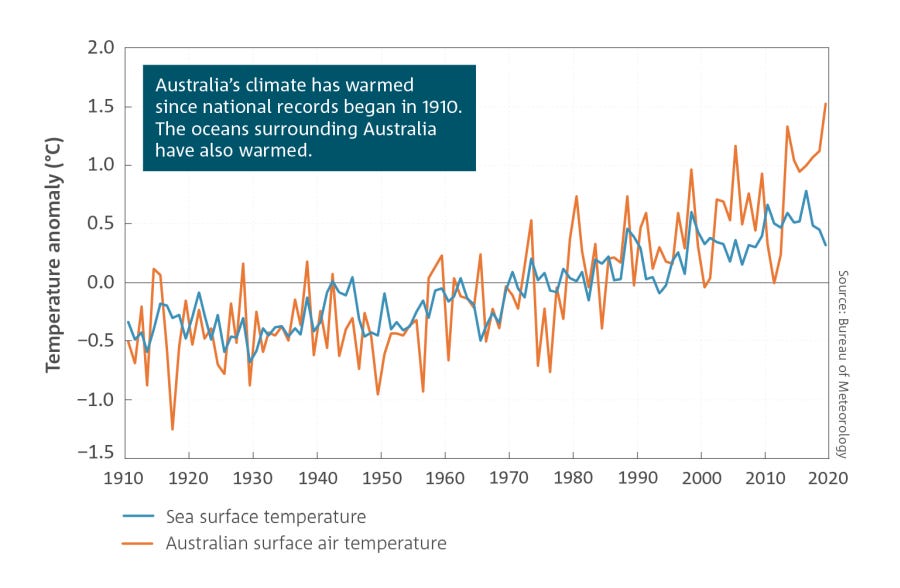
Rustad’s ascendance started with a simple social media post. It was not even by him. He reposted a graphic from forest ecologist and pro-industrialist Patrick Moore claiming there was no climate warming in Australia between 1999 and 2010, and therefore CO₂ is a good thing for the environment.
Rustad met with the then-leader of the opposition, Kevin Falcon, who determined that there was no way the two could continue to work together. Rustad was removed from the BC Liberal caucus and became an independent.
“Following a pattern of behaviour that was not supportive of our caucus team and the principles of mutual respect and trust, I have removed MLA John Rustad from the B.C. Liberal Caucus effective immediately.”
Kevin Falcon, August 18, 2022
Rustad instead took the reins of the BC Conservative Party — at the time a fringe organization that had not elected anyone to the legislature since 1975. He started off his leadership by making it clear what his priorities were: banning electric vehicle subsidies and transgender people.
However, thanks largely to the collapse of his former party — now ironically called BC United — John Rustad ended up uniting right-leaning voters in the province to almost defeat David Eby’s NDP in the 2024 election.

The car that almost won the race
“Frankly, it's a clown car of candidates that aren't ready to govern.”
BC United Leader Kevin Falcon, referring to the BC Conservatives during the 2024 election, May 27, 2024
When I was a teenager and local candidates visited my high school, I decided to pose a series of questions on violence against queer students to each of them. My questions were specific to bullying, but this was also the time period when same-sex marriage was being debated federally.

I approached the BC Conservative candidate just as she was going to leave. I told her I wanted to ask about safety for LGBT students (that was the acronym at the time). She looked me dead in the eyes and said, in a surprisingly menacing way, “I’m married.”
For my entire life — at least until 2024 — the BC Conservatives have been a fringe party comparable to Christian Heritage or the Libertarians. The BC Liberal Party was philosophically conservative, so the Conservatives were largely people further to the right of the right-wing Liberals. In the election where their local candidate tried to ward me off with her marital status, the party was led by Christian conservative activist Wilf Hanni, who would go on to lead the BC Christian Heritage Party in 2010.

While the further-right-than-the-right nature of the party did not resonate with voters, the Conservatives faced a bigger problem internally — in-fighting. In 2009 Hanni and eight directors resigned, citing the obstinance of other board members as the reason.
“We have spent much of the last four years fighting a long and protracted battle with a group of dissidents. As a result, the Party has amassed almost $30,000 in legal bills and we still have not managed to unite the members of the Board of Directors. A small band of Board Members still insists on fighting and having its own way.”
Wilf Hanni’s statement of resignation, June 30, 2009
Despite multiple efforts to build the party into a political force, their governing body seemed to keep getting in its own way.
When the party surged in support under John Cummins as an alternative to the BC Liberals under Christy Clark, a faction in the party calling itself the Friends of the BC Conservatives, led by party vice-president Ben Besler of Chilliwack, pushed for a leadership review to remove Cummins. They also tried unsuccessfully to get their slate elected to the party executive. The internal conflict led to floor-crossing MLA John van Dongen to abandon the organization, leaving them once-again without representation in the legislature. Cummins resigned after the election.
“[Cummins took] a firm stand in support of the will of the majority of party members against who sought, through bullying, intimidation, and grandstanding tactics to discredit his leadership.”
Dan Denis, party president, July 18, 2013
Once they finally picked a new leader — hunting guide Dan Brooks — they almost immediately began trying to get rid of him. His opponent in the leadership race, businessman Rick Peterson, sued the party amidst back-and-forth accusations of smear campaigns. Less than two years later, without ever leading the party in an election, Brooks resigned.
A few months later, Brooks said that the internal issues that had led to his resignation had been resolved and threw his hat back into the ring to be leader again. He won a narrow, second-ballot victory with 52.1% of the vote.
A month later the party executive voided his victory and threw him out. The party claimed that the executive meeting where they approved Brooks’ candidacy had not had sufficient quorum and therefore he had been ineligible to run. The party was not able to get their act together afterwards, and entered into the 2017 election leaderless.
“They don’t have a leader, they don’t have any money, they don’t have any idea of who could be the leader. The only thing that is going to save (them) is a miraculous emergence of a very high profile individual politician who thinks they can somehow save the BC Conservatives. They’re like praying mantises, they eat their leaders.”
Dan Brooks, October 28, 2016
The Conservatives then chose Trevor Bolin — a Fort St. John city councillor — as their leader after determining no one else qualified. Bolin managed to survive as leader into the 2022 election, where he placed second in Peace River North with 34%. He stepped down after John Rustad crossed the floor to the Conservatives, allowing him to become leader. Bolin originally intended to still run as the candidate for Peace River North, but changed his mind a year before the election.
A leader and not a leader
“I’m not sure if he forgot that one day we would be in a caucus room together and having to work together, or if it just shows the lack of intelligence the man has, but that’s why there is a splinter. It’s not because people can’t get together and work together. They can. It’s because John Rustad lied, and he lied to people blatantly, and he created an untenable work situation.”
United-turned-Conservative-turned-Independent MLA Elenore Sturko after being removed from caucus by John Rustad, September 23, 2025
Erwin Schrödinger, a theoretical physicist, thought that Niels Bohr and Werner Heisenberg's philosophical ideas on quantum mechanics were somewhat absurd when taken too literally. He challenged the idea within mathematical wave functions that something can be a combination of multiple possibilities until it is observed, at which point the possibilities collapse and the observation becomes reality. He devised a thought experiment in which a cat is in a box with a vial of poison that could break, killing the cat. Mathematically, according to quantum theory, the cat is both alive and dead until the observer opens the box. However, intuitively people understand that the cat is either alive or dead, regardless of whether it is observed. Therein lies the critique.
Trying to understand the paradoxes of quantum mechanics may be easier than trying to understand what exactly happened in the BC legislature last week.
John Rustad did what no one thought possible. He built up the Conservative Party, surged in the polls, united the right and accepted the unconditional surrender of his former party. After the election last fall, the BC Conservatives went from having not elected anyone since before I was born to holding 44 of the 93 seats in the Legislative Assembly.
Almost immediately the question became how long he could hold the coalition together. It is one thing to unite people under one banner when the polls are surging in your favour — it is another thing entirely to keep that group working together when the going gets tough.
And things got tough quickly.
Rifts formed between the more progressive conservative-types, former members of the BC Liberals BC United, and far-right culture warriors. Before the newly-elected Conservative MLAs had even figured out where the legislature bathrooms were, a group publicly demanded that Rustad punish a fellow MLA for siding with the Vancouver Police Board in an internal conflict involving their vice-chair.

It was not long after things boiled over, with Vancouver-Quilchena MLA Dallas Brodie derailing Rustad’s agenda by focusing her energy on publicly attacking Indigenous people. After a conflict-ridden caucus meeting in which Brodie stormed out daring Rustad to kick her out of caucus, he did. Two other MLAs quit in solidarity, and Brodie formed the far-right OneBC in order to further her agenda of opposing reconciliation and the existence of transgender people.

Brodie and her fellow culture warriors leaving caucus relieved some of the pressure on Rustad, as he was left with a slightly more civil group of people to manage, but it did not last. Conflict surrounded his leadership in the lead-up to the party’s annual general meeting. Much like how Ben Besler tried to oust John Cummins in 2013, a faction attempted to oust Rustad. However, the membership affirmed their support with a strong 71% vote in favour of him continuing.
Rustad followed his win by expelling MLA Elenore Sturko — one of the MLAs to switch sides to support his ascendance against BC United — over accusations she was plotting against him. Shortly after, another MLA quit his caucus over his leadership.
Not willing to accept the decision of the party membership, the party executive and members of the caucus continued to try to end Rustad’s leadership. The Conservative riding association in Esquimalt-Colwood — which placed more than 20% behind the winning NDP — dissolved and joined the Christian Heritage Party. The party’s management committee wrote a letter asking Rustad to voluntarily step down due to the in-fighting and conflict. Rustad searched MLAs phones to find out who was leaking damning information to the media. Finally, 20 Conservative MLAs — more than half of his remaining caucus — signed a letter stating non-confidence in his leadership.
Then, much like ousting Dan Brooks on a technicality in 2016, the party executive declared Rustad “professionally incapacitated” — using a clause from their constitution intended for a situation like a leader being in a coma — and removed him as leader. They appointed former BC United MLA Trevor Halford as interim leader.
However, leader of a political party and leader of a legislative caucus are different things.
If the party had waited a single day more before removing Rustad as leader, he would have closed out the legislative session as leader of the opposition. Instead, last Wednesday’s final day of the fall sitting became a drama worthy of a soap opera. Amidst confusion, accusations, and declarations of “not my leader”, no one knew who was the actual leader of the opposition. Both sides attempted to get the Speaker to recognize the validity of their claim to lead the caucus. The Speaker decided not to weigh in on who he would recognize, and the house adjourned without a clear answer.
Rustad finally resigned the next day. The man who came from the back-bench to unite the right and almost form government was tossed just over a year after his astounding rise.
The next meal leader
“Those are incredibly deep divides to try to bridge in a leadership campaign in a way that allows both sides to see themselves in the party when the dust settles and a leader is chosen.”
Stewart Prest, political science lecturer at the University of British Columbia, December 4, 2025
The BC Conservatives will now enter into a leadership race. It is likely that each of the fractured factions of the fragmented organization will put forward candidates. It will be up to the membership of the party to decide whether they want to shift back to the market centrism of the former BC United/Liberal Party, try to woo back the far-right represented by Brodie and OneBC, or forge a new identity for the party.
What is clear is that, as it stands, this is not an organized group of people ready to take on running the public service of the province of British Columbia. Constant in-fighting, back-stabbing, conflict, and leaks to the media do not point to an organization with a healthy governance structure. It will be up to the next leader to get the party into good enough shape to earn the confidence of British Columbia voters.
But as Hanni, Cummins, Brooks, Bolin and Rustad all learned, the BC Conservative Party is a difficult organization to lead, and few escape unscathed.
I hope everyone has a wonderful end to 2025. Like last year, I’m taking the rest of December off to recharge. I will be back writing again in the new year (unless something happens I simply must write about).